
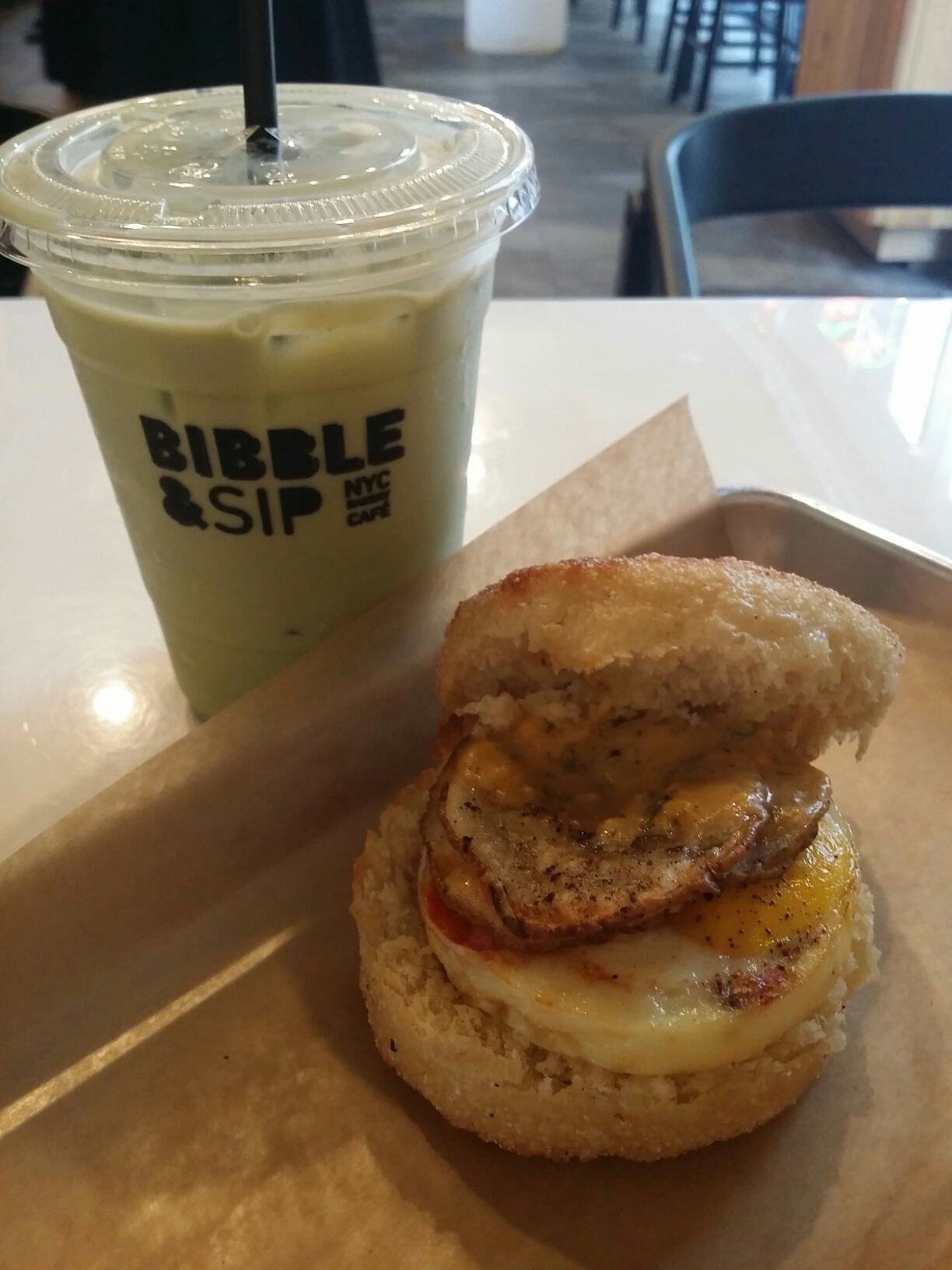
Breakfast in Times Square is how we start our day in the busiest city through rush hour. A small café in the middle of crowded streets called Bibble & Sip served an amazing Matcha latte on the side of English muffin.
If you want to know how it feels like to look up the heaven, standing inside the Guggenheim museum most likely give you that experience. Designed by Frank Lloyd Wright, the cylindrical building, wider at the top than the bottom, was conceived as a “temple of the spirit”. Its unique ramp gallery extends up from ground level in a long, continuous spiral along the outer edges of the building to end just under the ceiling skylight.
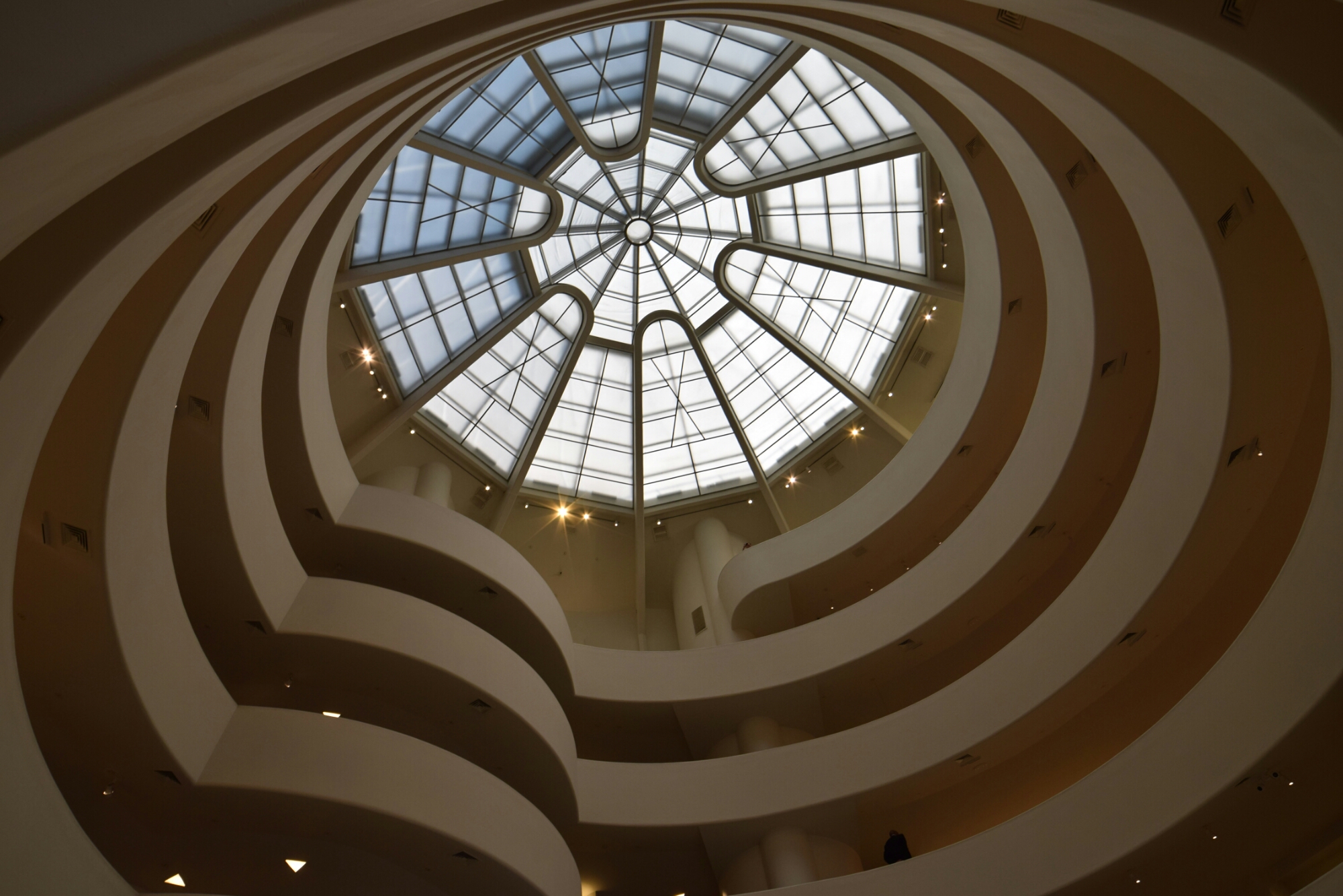
Solomon R. Guggenheim Museum, a.k.a The Guggenheim, is an art museum located at 1071 Fifth Avenueon the corner of East 89th Street in theUpper East Side neighborhood ofManhattan, New York City. It is the permanent home of a continuously expanding collection of Impressionist,Post-Impressionist, early Modern andcontemporary art and also features special exhibitions throughout the year.
The significant design of this museum is it’s atrium. From 1943 to early 1944, Wright produced four different sketches for the initial design. While one of the plans (scheme C) had a hexagonal shape and level floors for the galleries, all the others had circular schemes and used a ramp continuing around the building. He had experimented with the ramp design on the house he completed for his son in 1952, the David & Gladys Wright House in Arizona. Wright’s original concept was called an inverted “ziggurat”, because it resembled the steep steps on the ziggurats built in ancient Mesopotamia. His design dispensed with the conventional approach to museum layout, in which visitors are led through a series of interconnected rooms and forced to retrace their steps when exiting.
The spiral design recalled a nautilus shell, with continuous spaces flowing freely one into another. Even as it embraced nature, Wright’s design also expresses his take on modernist architecture’s rigid geometry which he explained, “these geometric forms suggest certain human ideas, moods, sentiments – as for instance: the circle, infinity; the triangle, structural unity; the spiral, organic progress; the square, integrity.” Forms echo one another throughout: oval-shaped columns, for example, reiterate the geometry of the fountain. Circularity is the leitmotif, from the rotunda to the inlaid design of the terrazzo floors.
The museum’s collection has grown organically, over eight decades, and is founded upon several important private collections, beginning with Solomon R. Guggenheim’s original collection. The collection is shared with the museum’s sister museums in Bilbao, Spain, and elsewhere. In 2013, nearly 1.2 million people visited the museum, and it hosted the most popular exhibition in New York City Rebay conceived of the space as a “temple of the spirit” that would facilitate a new way of looking at the modern pieces in the collection.
Vasily Kandinsky, Black Lines (Schwarze Linien), December 1913
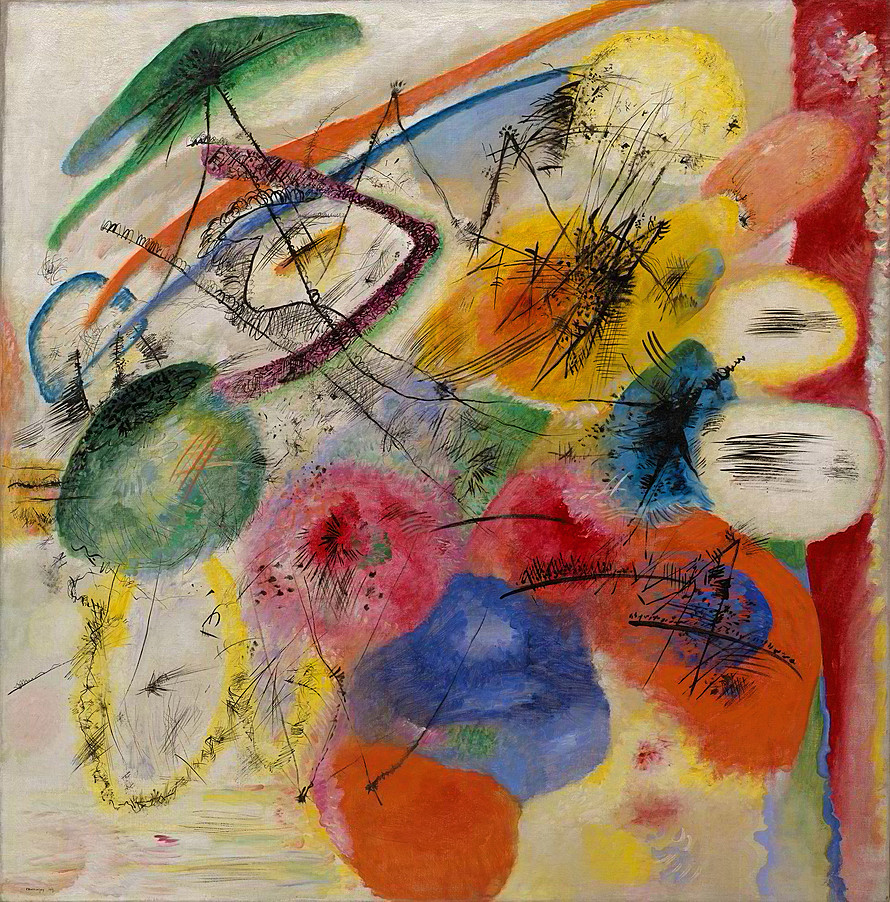
With its undulating colored ovals traversed by animated brushstrokes, Black Lines is among the first of Kandinsky’s truly nonobjective paintings. The network of thin, agitated lines indicates a graphic, two-dimensional sensibility, while the floating, vibrantly hued forms suggest various spatial depths.
By 1913 Kandinsky’s aesthetic theories and aspirations were well developed. He valued painterly abstraction as the most effective stylistic means through which to reveal hidden aspects of the empirical world, express subjective realities, aspire to the metaphysical, and offer a regenerative vision of the future. Kandinsky wanted the evocative power of carefully chosen and dynamically interrelated colors, shapes, and lines to elicit specific responses from viewers of his canvases. The inner vision of an artist, he believed, could thereby be translated into a universally accessible statement.
Vasily Kandinsky, Several Circles (Einige Kreise),January–February 1926

When Kandinsky returned to his native Moscow after the outbreak of World War I, his expressive abstract style underwent changes that reflected the utopian artistic experiments of the Russian avant-garde. The emphasis on geometric forms, promoted by artists such as Kazimir Malevich, Aleksandr Rodchenko, and Liubov Popova in an effort to establish a universal aesthetic language, inspired Kandinsky to expand his own pictorial vocabulary. In the Black Square, epitomizes Kandinsky’s synthesis of Russian avant-garde art and his own lyrical abstraction: the white trapezoid recalls Malevich’s Suprematist paintings, but the dynamic compositional elements, resembling clouds, mountains, sun, and a rainbow, still refer to the landscape. The importance of circles in this painting prefigures the dominant role they would play in many subsequent works, culminating in his cosmic and harmonious image Several Circles. “The circle,” claimed Kandinsky, “is the synthesis of the greatest oppositions. It combines the concentric and the eccentric in a single form and in equilibrium. Of the three primary forms, it points most clearly to the fourth dimension.”
Another collection has caught my attention is Deutsche Guggenheim Commissions
Beginning in 1997 and ending in 2013, the Solomon R. Guggenheim Foundation and Deutsche Bank undertook a unique and ambitious program of contemporary art commissions, enabling the Guggenheim to act as a catalyst for artistic production. The participants in the fifteen-year commission series included both established and younger artists of various nationalities, working in a diversity of mediums, from paintings and photographs to large-scale sculptural and video installations.

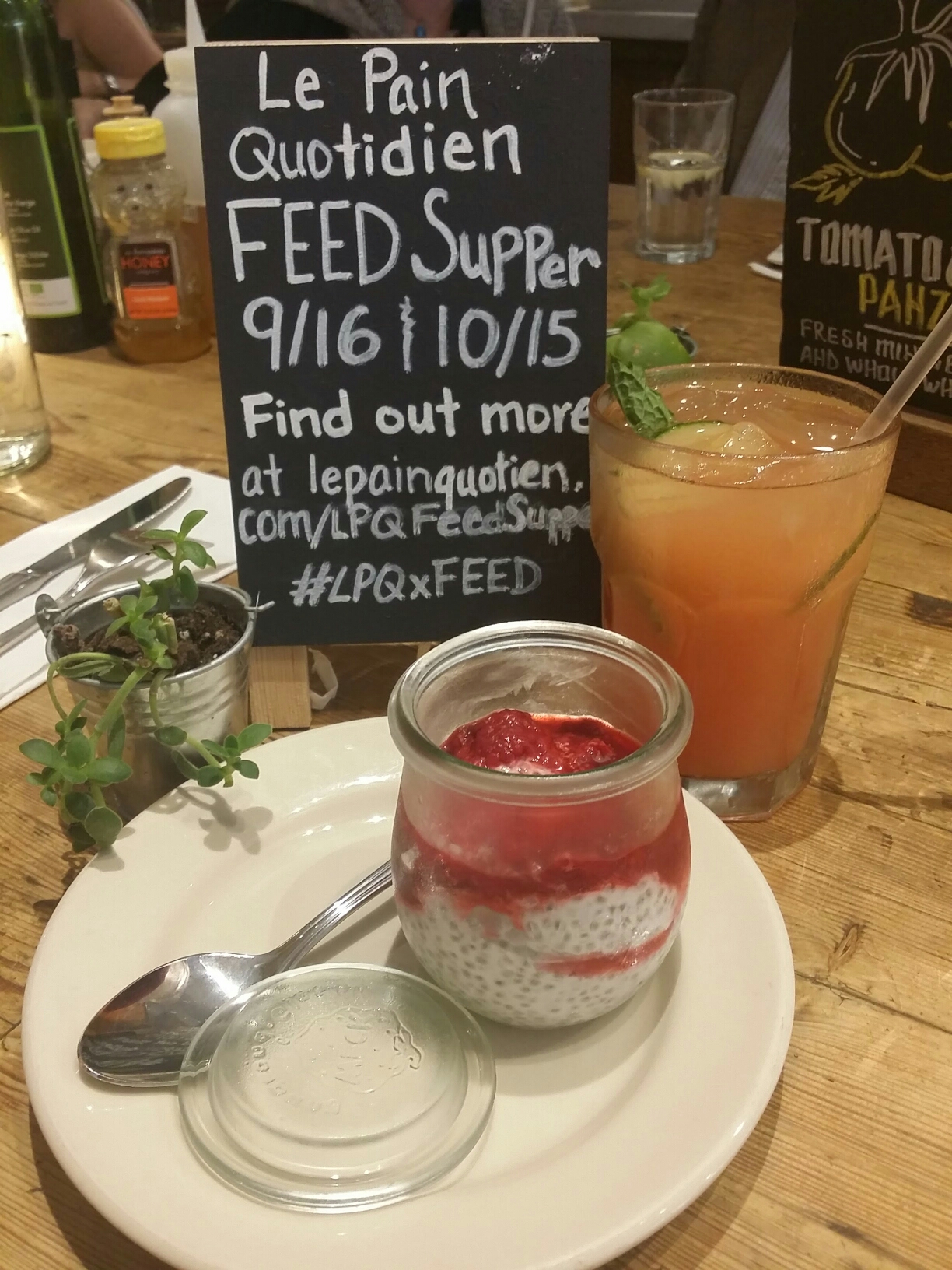
We meet up friends for a little brunch in the middle of the day at Le Pain Quotidien with raspberry chianti pudding and house special summer punch mint watermelon cucumber
Lunch/dinner at a place has just become my favorite burger joint in the east coast Shack Shark on 5th Street. Being a part of redevelopment for the Madison Square Park Conservancy, new kiosk-style restaurant within the park is the first Shake Shack in July 2004. From its beginning the restaurant was not designed to be a chain, intended to be a single shop location designed specifically for New York City. After 10 years, Shack Shark has spread it’s empire to 66 locations across North America, Europe, Asia and Middle Eastern with its simply delicious Smoke Shack and Shroom Shack!!! Yummy

Getting lost in Central Park suprisingly became the most exhilerating feeling within the city that never sleep.
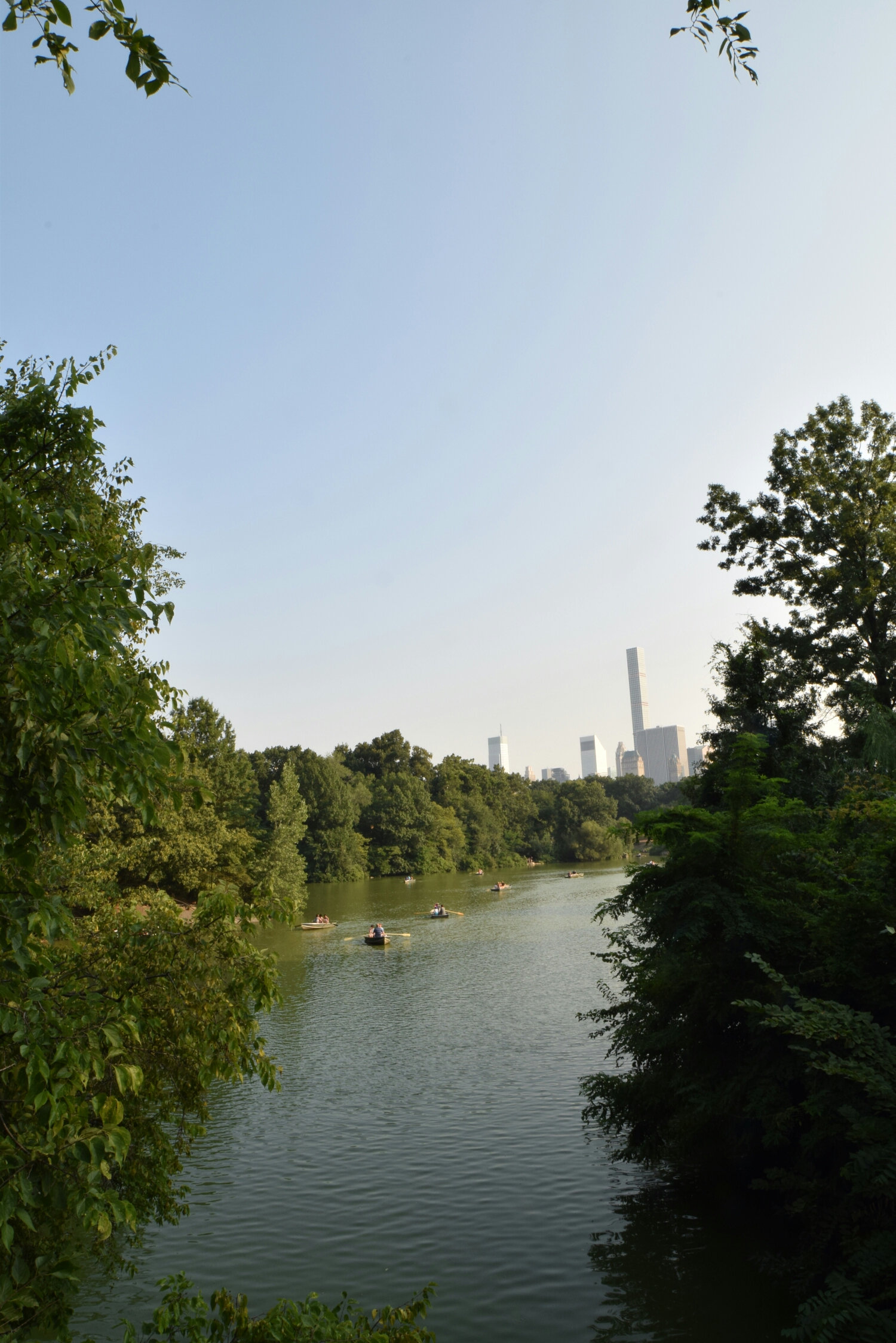
We tried to cross the central park and avoiding the car noise/ air pollution, but lost. Well, we are classified NYC newbie!!! Coming across the Turtle pond locates in Mid-Park between 79th and 80th Streets. Like all of the other water bodies in Central Park, Turtle Pond is man-made, filled with New York City drinking water. It is the home to five species of turtles who live in the Pond year round. The most common species in Turtle Pond is the Red-Eared Slider, which you can identify by the small red spots around their ears. They love basking in the sun on flat logs or rocks, which makes the base of Vista Rock the perfect spot for their sun bathing activities. When the sliders are provoked, they quickly slide back into the cool waters of the Pond. Turtle Pond has the distinction of being the most recent water body added to the Park’s design.
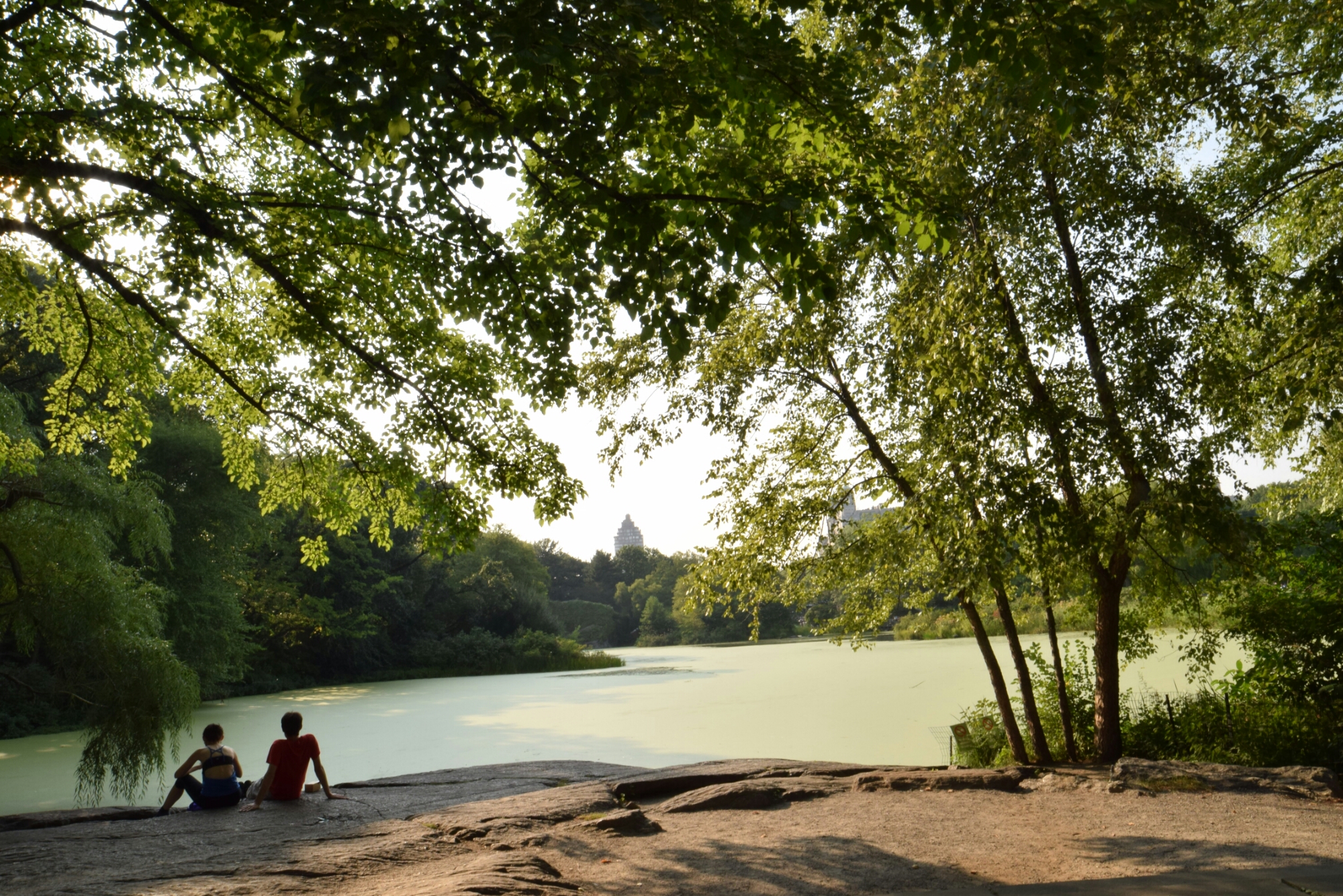
Standing high on the edge of Turtle Pond is Belvedere Castle, named for the Italian meaning “beautiful view,” Central Park’s Belvedere Castle offers park goers exactly what its name implies. With its two balconies, it supplies wonderful panoramic views that include some of Central Park’s most beautiful and famous landmarks: the Delacorte Theater, the Great Lawn, thond and the Ramble.
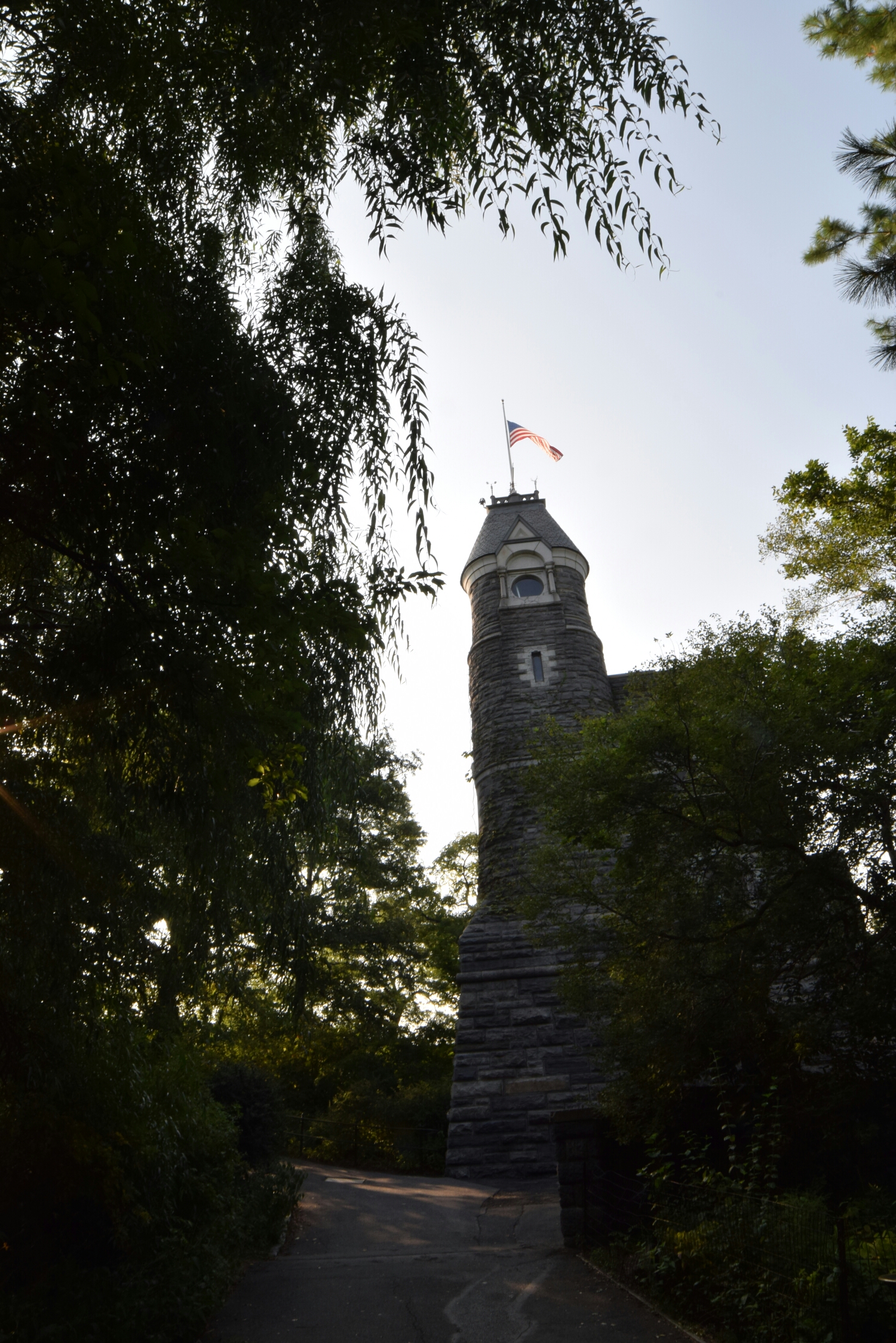
Originally designed in 1865 by Calvert Vaux and Jacob Wrey Mould, Belvedere Castle was intended to be a Victorian Folly, a fantasy structure that provides a great backdrop and views, but without a real intended purpose. With its strong stone façade, grand turret and flag, the castle was merely a stunning attraction in Central Park.
Over the decades the castle suffered from deterioration and in 1983, the Central Park Conservancy renovated and reopened the structure, which now also serves as the Henry Luce Nature Observatory. Inside, visitors will discover a vast collection of natural history artifacts, such as skeletons and paper mâché birds. There are also microscopes and telescopes on the premise to give guests insight into how naturalists study the world. Those who want to explore Central Park from a scientific standpoint can use the castle’s field packs that contain binoculars, reference materials, maps and a notepad to jot down observations. Finally, for birdwatchers, the castle is an ideal location to catch a glimpse of a hawk, kestrel or osprey.
The day has come to an end with a promise of many more adventures to explore…
P. S. We mark this day as the day two wanderlusts finally arise😍😍🙌🙌
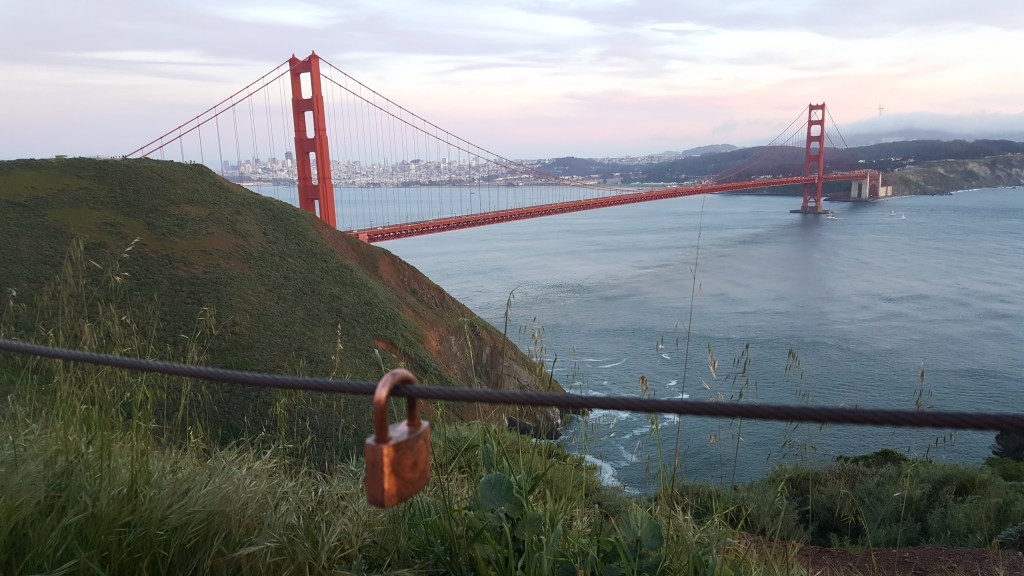


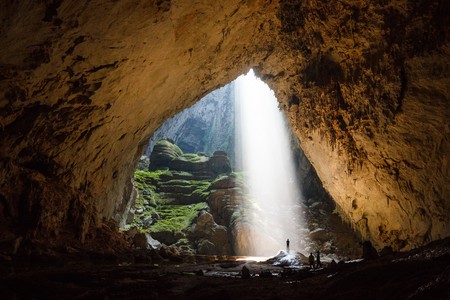
 May Your Search Though Nature ... Lead You To Yourself
Leave a comment