
Harvard University
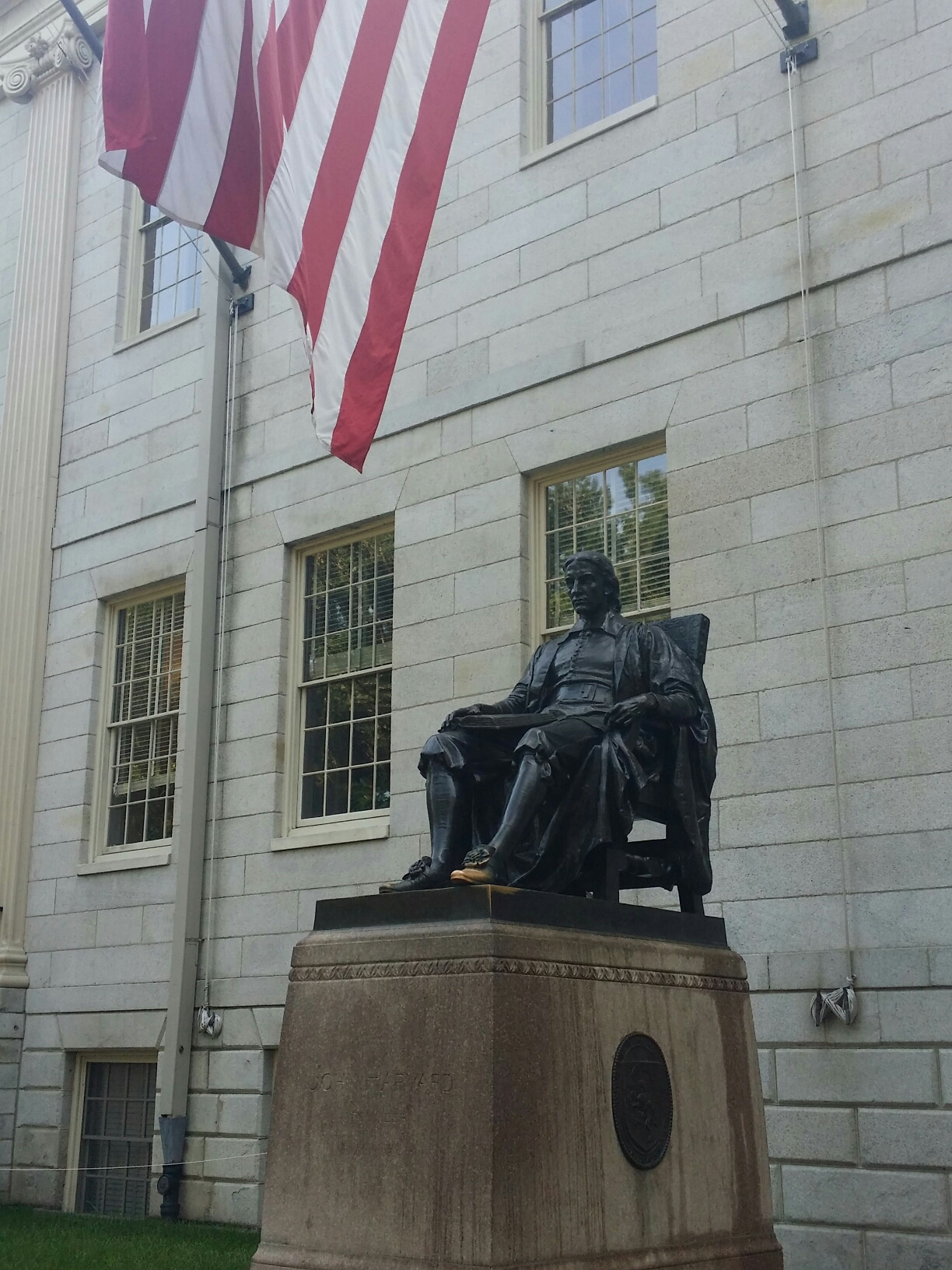
Sitting in the middle of grassy area of 22.4 acres of Harvard Yard is John Harvard. I heard about the tradition of touching his shoe once you’re there to receive goodluck, which explains why one of his dress shoes is golden shine like that. Aren’t all of us want a little boost in our education journey?
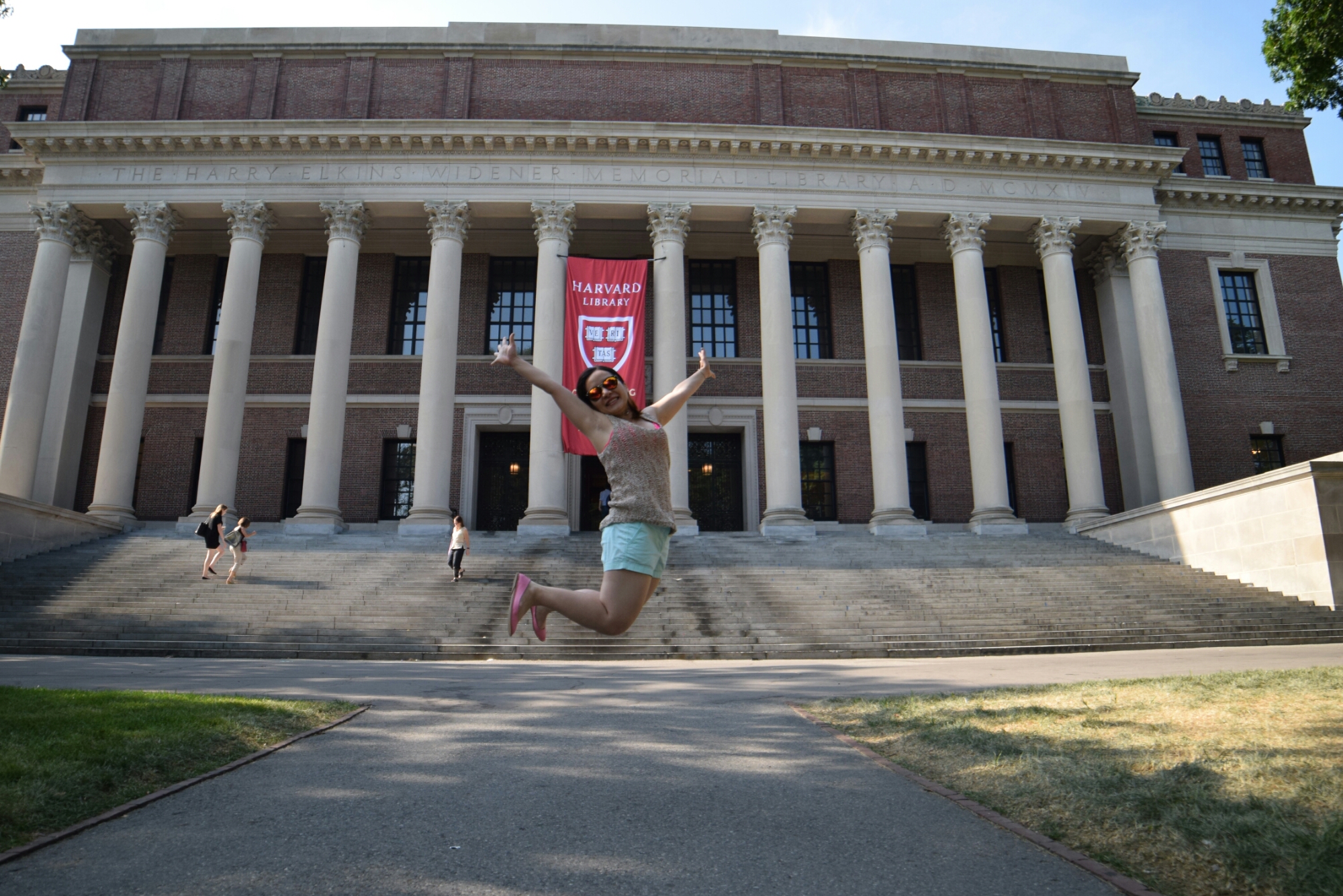
Widener Library is Harvard University’s flagship library. Built in the early 1900s by Eleanor Elkins Widener, it was given to Harvard as a memorial to her son, Harry, Class of 1907, an enthusiastic young bibliophile who perished aboard the Titanic. We are honor to be here as Widener Library celebrates its centennial in 2015. Over the last 100 years, Harvard’s scholars, patrons and staff have made as many discoveries and connections at Widener Library as there are books in its immense stacks. Launched with a single gift by Eleanor Elkins Widener in memory of her son Harry, Widener Library’s presence quickly became a touchstone for academic libraries and an integral part of life at Harvard. There is not a better place to illustrate the challenges of balancing historic preservation with energy efficiency and sustainability upgrades than Harvard’s Widener Library.
Memorial Hall
Following the Civil War, The Harvard Corporation gave its official sanction to a group of distinguished and diverse Harvard alumni who petitioned the college to let them raise funds for a memorial to those Harvard graduates who fought for the Union cause. The new committee of fifty Alumni suggested that the proposed memorial take the form of a building, one that would not only testify to the heroism of those who fell but also meet the college’s urgent and practical needs for a theatre and a gathering space for alumni.
The design of William Robert Ware, class of 1852, and Henry Van Brunt, class of 1854, was selected though it was much refined in the months and years to come. The building received its formal name, Memorial Hall, in September of 1870.
Not with the anguish of hearts that are breaking
Come we as mourners to weep for our dead;
Grief in our breasts has grown weary with aching,
Green is the turf where our tears we have shed.
While o’er their marbles the mosses are creeping
Stealing each name and its record away.
Give their proud story to memory’s keeping,
Shrined in the temple we hallow today.
Hushed are their battlefields, ended their marches.
Deaf are their ears to the drumbeat of mourn–
Rise from the sod ye far columns and arches!
Tell their bright deeds to the ages unborn.
Emblem and legend may fade from the portal,
Keystone may crumble and portal may fall;
They were the builders whose work is immortal,
Crowned with the dome that is over us all.
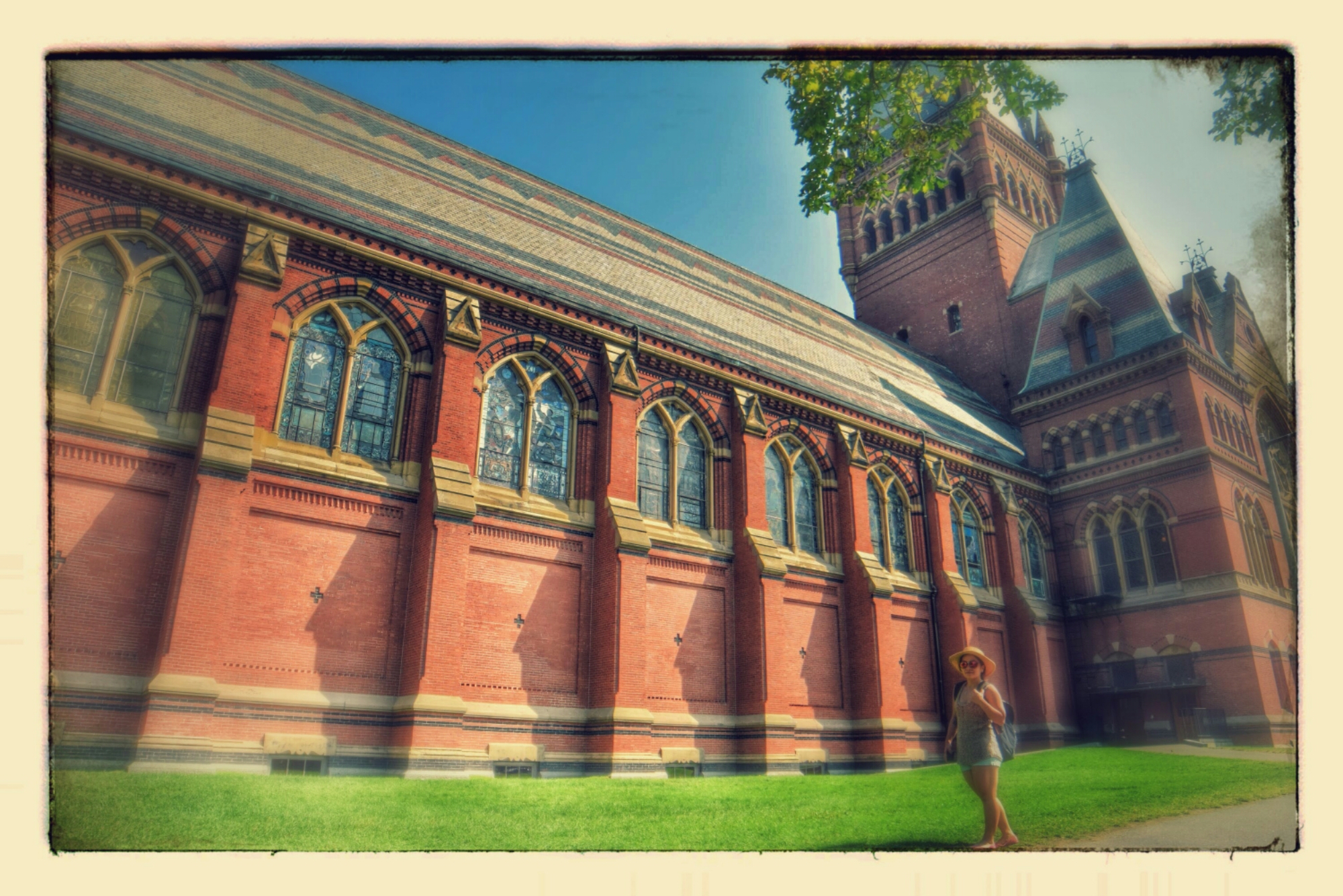
The great bristling brick Valhalla….that house of honor and hospitality which…dispenses…laurels to the dead and dinners to the living.
– Henry James,
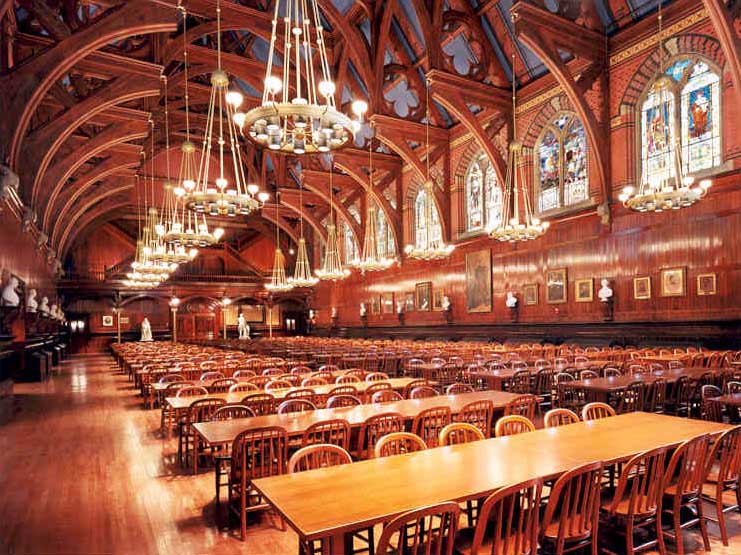
Annenberg Hall, named in memory of Roger Annenberg, ’62 and inspired by the great halls of Oxford and Cambridge Universities, this room is arguably the most impressive space at Harvard. The hall covers an expansive 9,000 square feet. Architectural features include the great hammerbeam trusses, stenciled ceiling, and walnut paneling. Over the hall, on the east end, the imaginative stairway sequence leading to the tower meeting rooms works with the ceiling trusses and the polychromatic brick wall to create a myriad of geometric patterns. Annenberg Hall houses a vast collection of paintings, sculpture and stained glass.
Central heating and kitchen space were absent from the original design for Annenberg Hall (previously Alumni Hall) since the only major banquet expected to take place in the hall was the great Commencement banquet which took place in June and was handled by caterers. The recent restoration allowed the vast and geographically central facility to, once again, serve a daily purpose in the lives of undergraduates. The hall is now used as a dining facility for first year students and is occasionally made available for other University and Community events. During the academic year, Harvard’s Dining Services department serves approximately 3,400 meals each day in Annenberg Hall. Unfortunately Annenberg Hall is not available for public viewing. Even though we sneaked in through the side door, we were able to catch a glimpse of Hogwarts’ world: big chandeliers and potraits of Alumni through history.
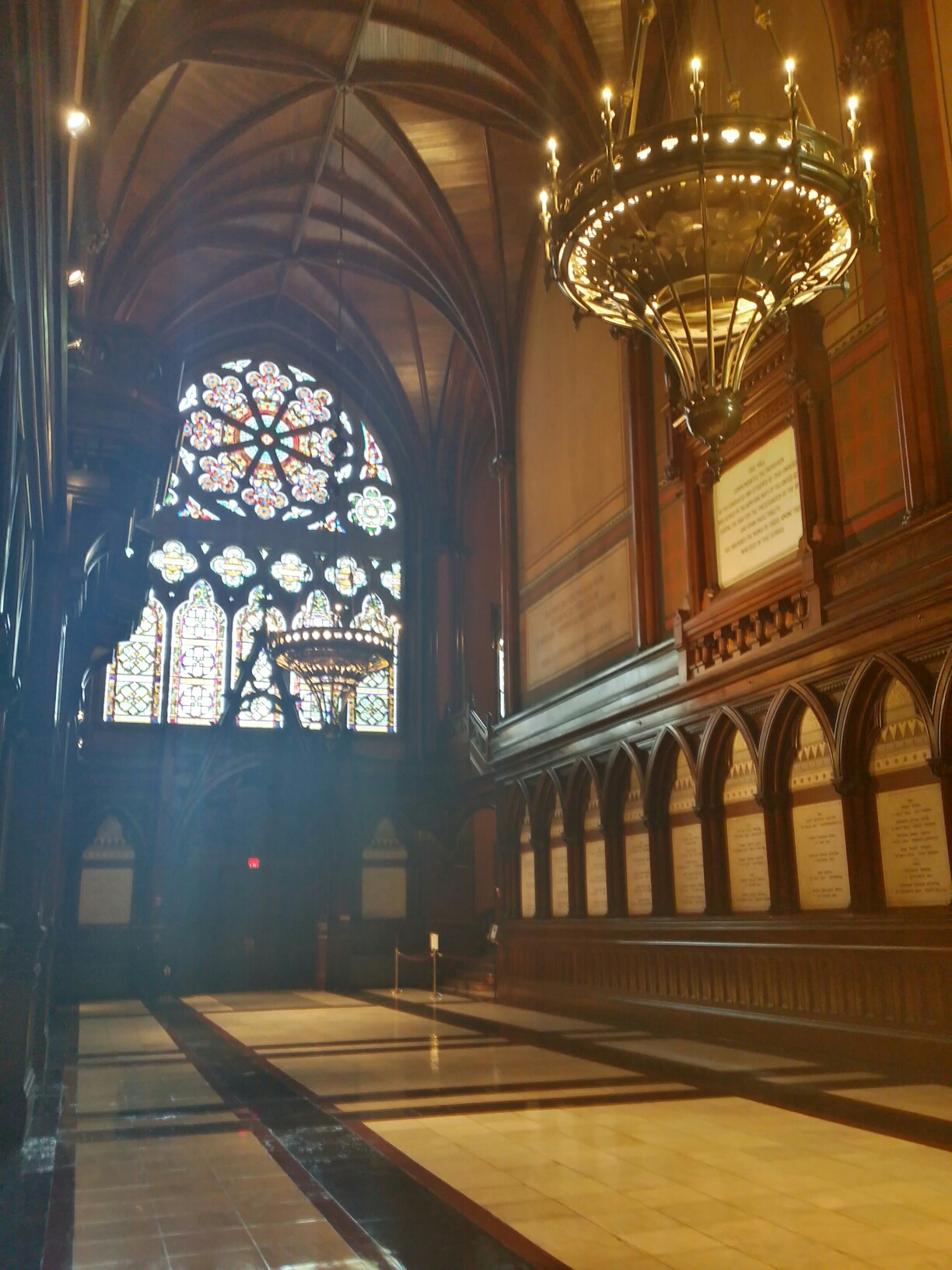
Just separated by a dark walnut wood wall from Annenberg Hall, the memorial transept presents a beautiful world of art. This memorial space boasts a 2,600 square foot marble floor, a sixty foot high wooden gothic vault, two stained glass windows spanning 708 square feet each, black walnut paneling, stenciled walls and 28 white marble tablets bearing the names of 136 Harvard associates who fell on behalf of the Union cause during the Civil War. The youngest, Sumner Paine, class of 1865, fell at Gettysburg on July 3, 1863, two years before his intended graduation. The Paul Joseph Revere listed is the grandson of the famous Paul Revere.
Three different stained glass works have been installed in the north transept window. The original work designed for this window by Donald MacDonald was removed and replaced by Sarah Wyman Whitman’s Martin Brimmer Memorial Window in 1898.
The Virtues Window has four full rosettes, separating the points of the five lancets. Each rosette contains the word “VERITAS” without any backing Harvard shield. In the five lancets are named ten virtues, two in each lancet on bands crossing to divide them into thirds. The lancets read from left to right as follows:
First:
SPES = Hope
PATIENTIA = Patience
Second:
AUTORITAS = Authority
DISCIPLINA = Discipline
Third:
MAGNANIMITAS = Magnanimity
CONSTATIA = Constancy [the second N in the Latin is omitted]
Fourth:
FORTITUDO = Fortitude
PRUDENTIA = Prudence
Fifth:
PROCLITAS = ? [Perhaps PROBITAS = Probity was intended]
TEMPERANTIA = Temperance
Public viewing hours of the transept are dictated by the College’s academic calendar, the Sander’s Theatre performance schedule and maintenance requirements. Typically, visitors may gain access to the transept on weekdays from 12:00 noon until 6:00 PM.
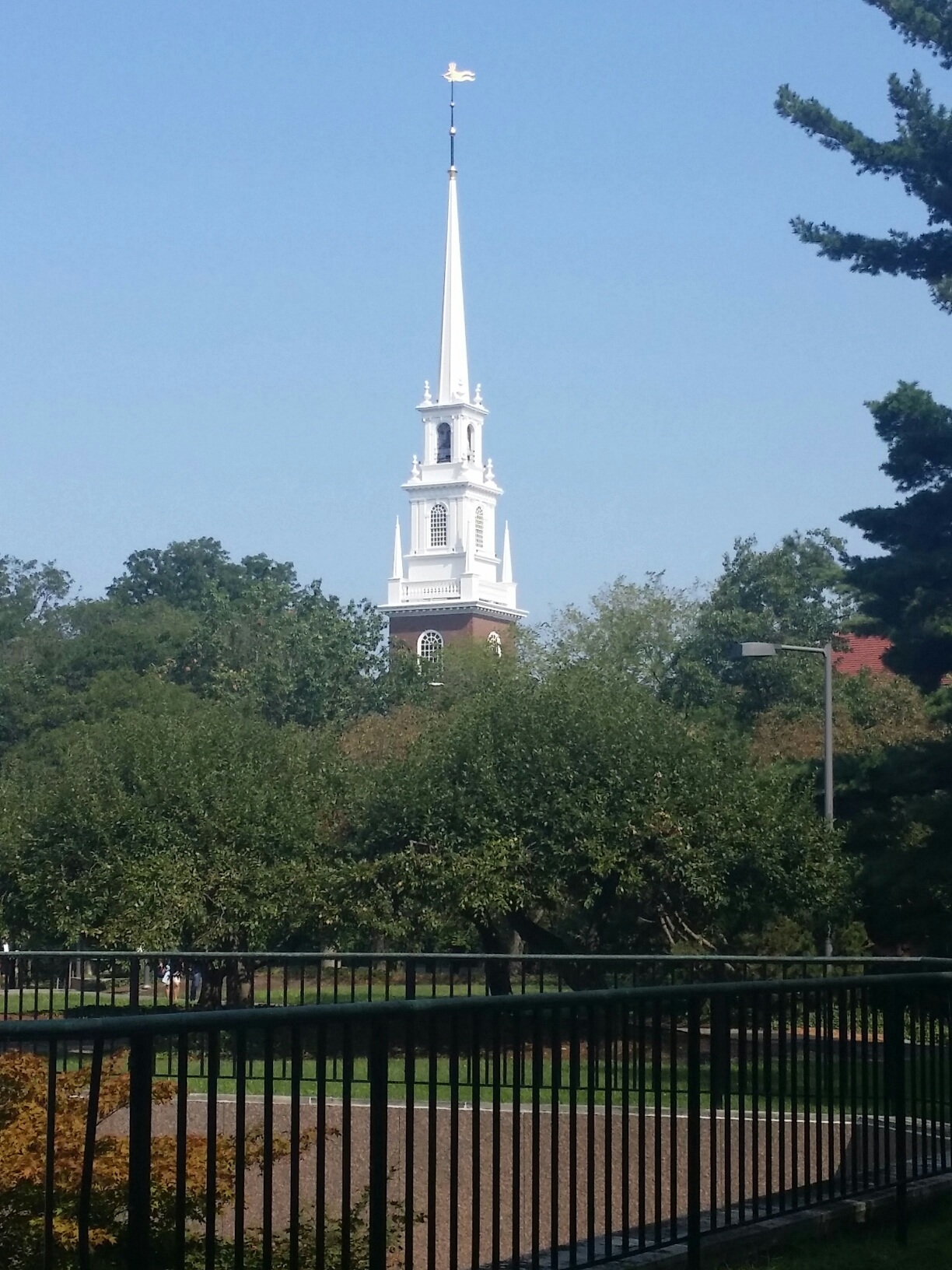
Lowell House is one of the twelve undergraduate residential houses withinHarvard College, located on Holyoke Place facing Mount Auburn Street between theHarvard Yard and the Charles River. It is officially named for the Lowell family but an ornate ALL woven into the ironwork above the main gate discreetly alludes toAbbott Lawrence Lowell, Harvard’s president at the time of construction. Its majestic neo-Georgian design, centered on two landscaped courtyards, received the 1938 Harleston Parker Medal and might be considered the model for later Harvard houses nearby. Lowell House is simultaneously close to the Yard, Harvard Square, and other Harvard “River” houses, and its blue-capped bell tower, visible for many miles, is a local landmark
Lowell was one of the first Houses built in realization of President Lowell’s long-held dream of providing on-campus accommodations for every Harvard College student throughout his entire career in the College.
Bye bye Boston




 May Your Search Though Nature ... Lead You To Yourself
Leave a comment