
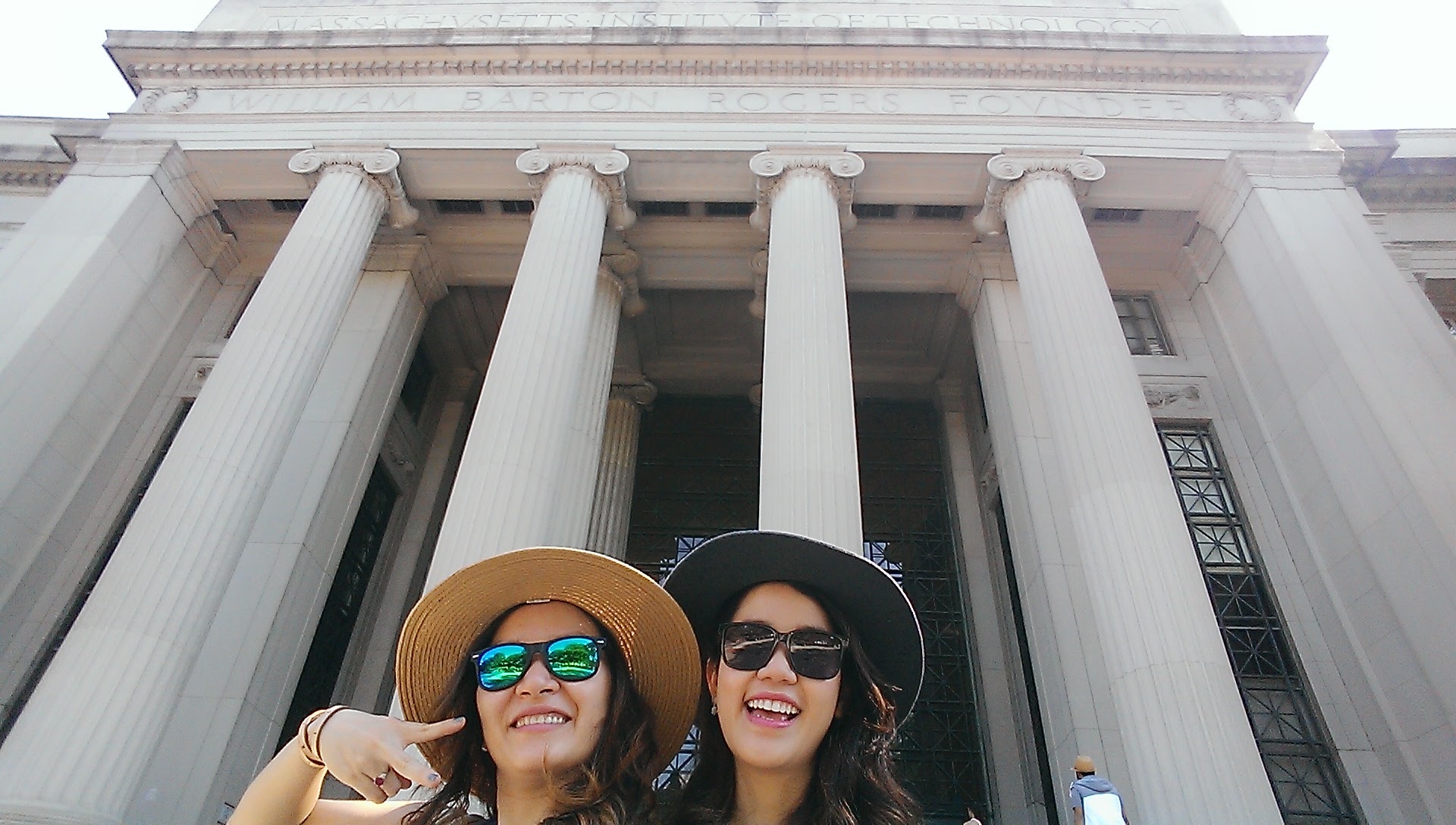
Getting lost is not always a bad thing. We took the stop not as planned ( public transportation newbie in the middle of Greater Boston area) and we discovered the beautiful modern architectural design throughout Massachusetts Institute of Technology.
The popular MIT Dome and first time selfish stick users work out well for us today. We are proud to be Asian, we love to take pictures even though it might annoy other people a little but it helps us remember all the moments in life.
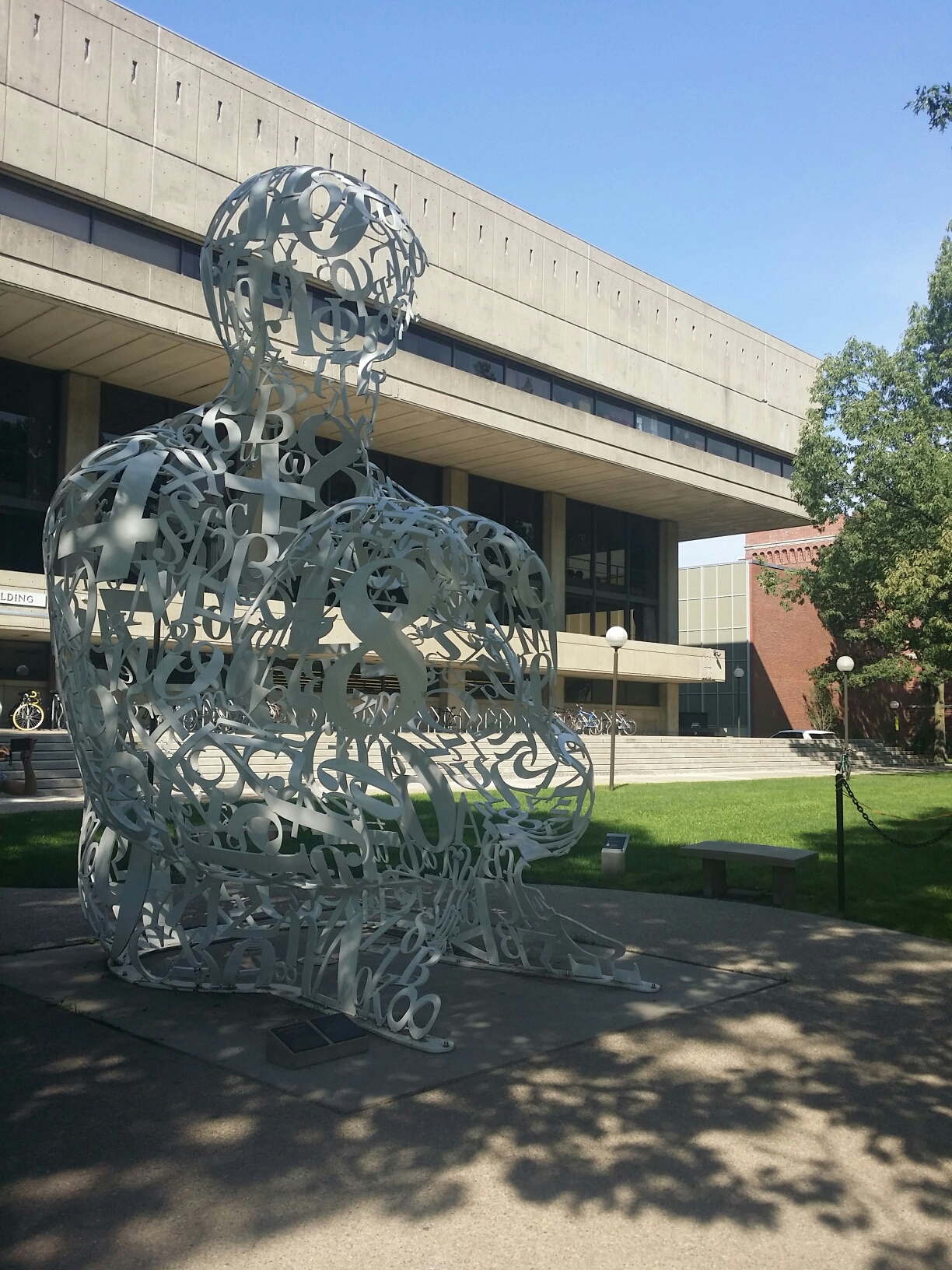
Beautiful Alchemist from Juame Plensa, originally on loan for the duration of MIT’s 150th anniversary celebration, can now call the Institute home. The sculpture, which sits between the Student Center and Massachusetts Avenue, represents a thinking man comprised of numbers and math functions.
White, emotive, anonymous. Alchemy is the magical side of science. The art of transmuting metals. Plensa’s The Alchemist at the heart of MIT’s campus reminds us of the humanity of knowledge. Surrounding oneself in numbers until they become more than numbers – metaphors, surrogates of complex theories of the order of the universe. The symbols make up the structure of the form, they become the form. From a distance the piece is of a thinking man, seated – but up close they are an abstraction, a formal compilation of shapes. The knees of the figure are open, inviting us to explore the interior/ exterior space. A space defined but not enclosed. Standing inside, the numbers and symbols frame your view of the campus. The public is pulled into the mind of a scientist.
Jaume Plensa is a world renown contemporary sculptor from Barcelona. His most well known work deals in large scale public sculpture that brings elements of the interior self into the landscape. He has done a number of sculptures with the same form as the Alchemist, but typically they are made up of letters – an allusion to language and the universal abstraction of communication. This piece specifically addresses the communication of math – which at MIT is not only a science but an art.
Acorn St, Beacon Hill is perfect spot for a romantic fairy-tale wedding photos in which we witnessed. The photographer wants to capture the essence of love, the nervous groom waiting to see his bride for the first time in the wedding dress. We are at awe to witness this special moment. Love is in the air.
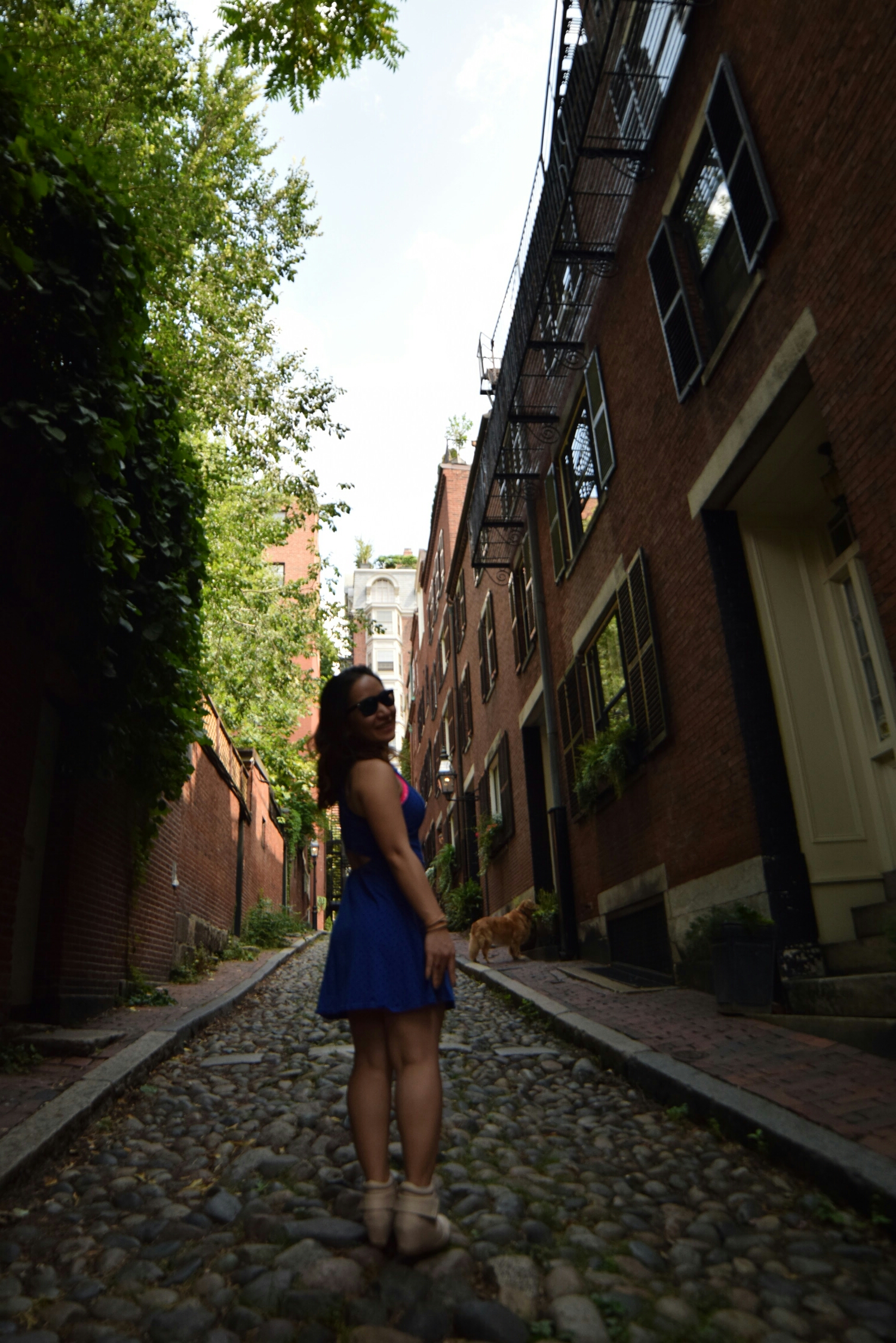
Beacon Hill, one of the oldest and most picturesque neighborhoods in the United States, is a thriving residential community and a popular tourist destination, located just a short walk from Boston’s theater district. This charming historic region, with its Federal, Greek Revival, and Victorian architecture is known for its historical landmarks, and its many antique shops, boutiques, and fine eating and drinking establishments. The area, approximately one-half to three quarters of a mile square, is bounded by Cambridge Street on the north, Somerset Street on the east, Beacon Street on the south, and Storrow Drive on the west. The Massachusetts State House, with its magnificent gilded dome, is a prominent landmark on Beacon Street just across from the Boston Common, a popular park enjoyed by residents and tourists alike.
Starting from the middle of Boston Common, Freedom trail takes you through history in landmarks. The Freedom Trail is a 2.5-mile-long (4.0 km) path through downtown Boston,Massachusetts that passes by 16 locations significant to the history of the United States. The Freedom Trail was originally conceived by local journalist William Schofield, who in 1951 suggested building a pedestrian trail to link together important local landmarks. By 1953, 40,000 people were walking the trail annually. And by September 2015, I am proud to be a part of these people, walking on the same historical street and breathing from under the same Boston sky years apart.
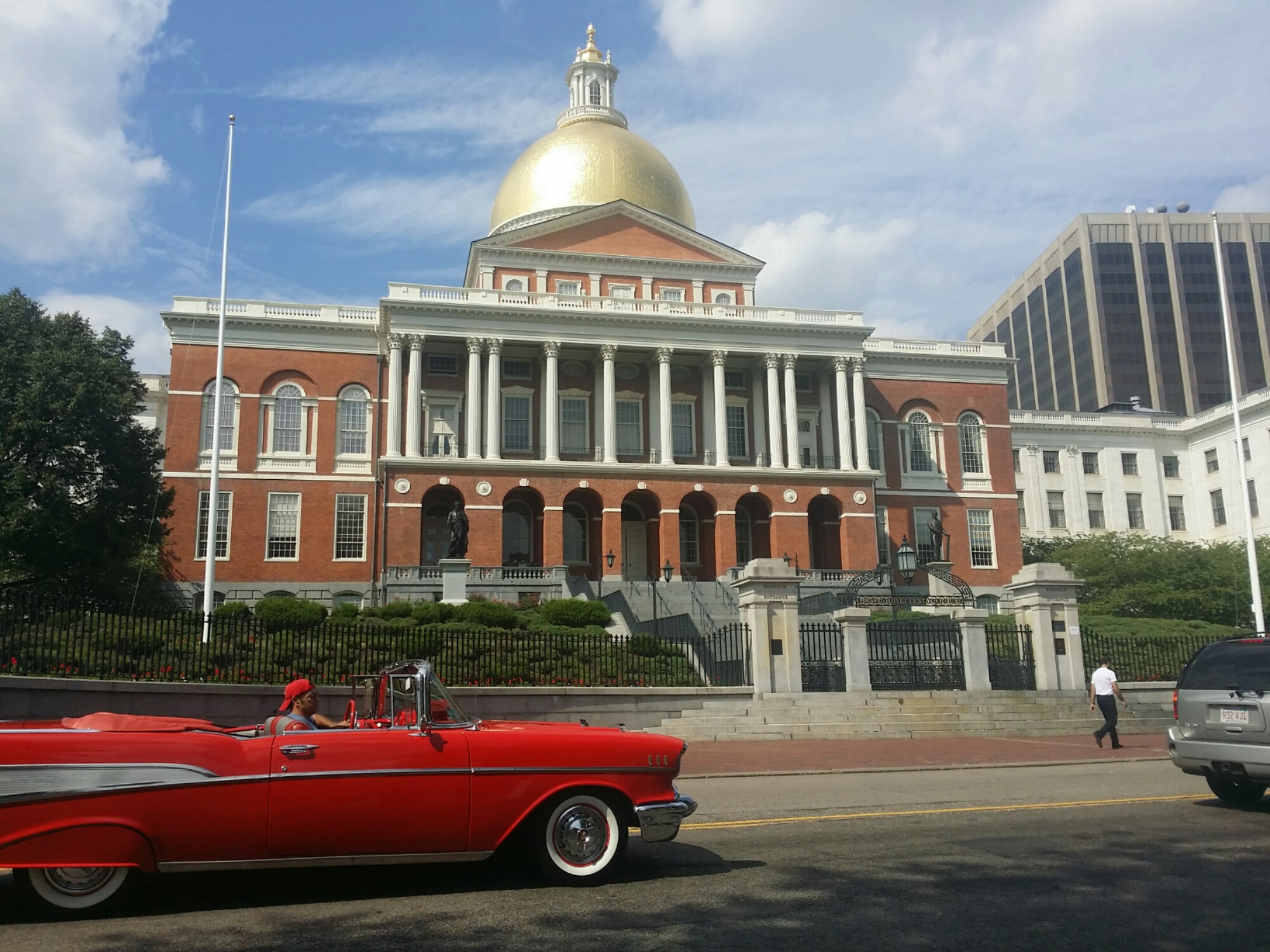
Massachusetts State House was built on land once owned by John Hancock, Massachusetts’s first elected governor. The building, designed by noted architect Charles Bulfinch, was completed in 1798, and has repeatedly been enlarged since. It is considered a masterpiece of Federal architecture and among Bulfinch’s finest works. The dome was first painted gray and then light yellow before being gilded with gold leaf in 1874. During World War II, the dome was painted once again, this time black or gray (depending on the source), to prevent reflection during blackouts and to protect the city and building from bombing attacks. In 1997, at a cost of more than $300,000, the dome was re-gilded, in 23k gold. The dome is topped with a gilded, wooden pine cone, symbolizing both the importance of Boston’s lumber industry during early colonial times and of the state of Maine, which was a district of the Commonwealth of Massachusetts when the Bulfinch section of the building was completed. After about ten pictures I finally got the clear poitrait of Massachusetts State House along with a classic red wagon.
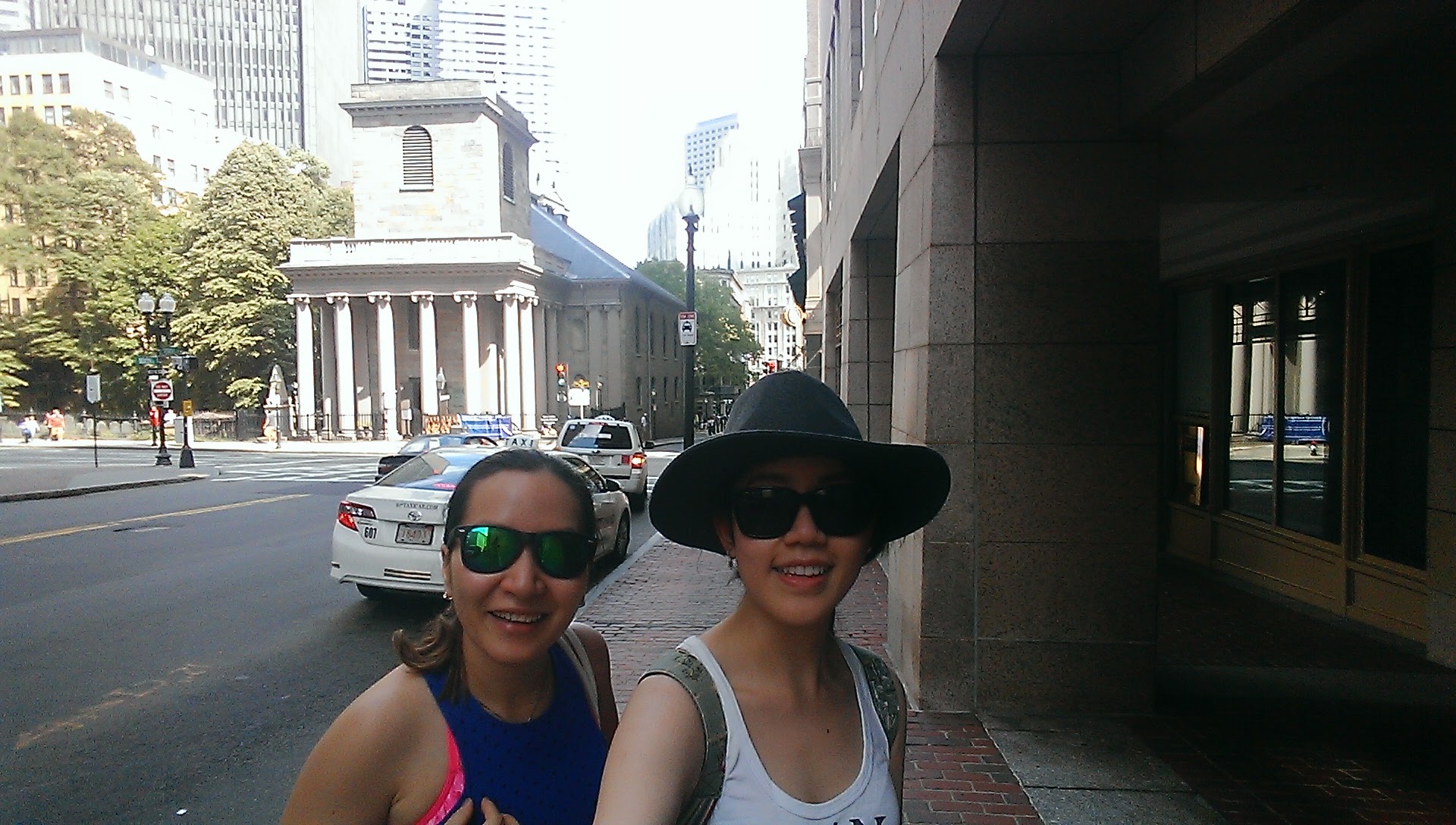
Our next stop is King’s Chapel which is housed in what was formerly called “Stone Chapel”, an 18th-century structure at the corner of Tremont Street and School Street in Boston, Massachusetts. The chapel building, completed in 1754, is one of the finest designs of the noted colonial architect Peter Harrison, and was designated aNational Historic Landmark in 1960 for its architectural significance.
Next Old State House which serves as an historic building in Boston, Massachusetts, at the intersection of Washington and StateStreets. Built in 1713, it was the seat of the Massachusetts General Court until 1798, and is one of the oldest public buildings in the United States. This is also the oldest surviving public building in Boston, and now serves as a history museum operated by the Bostonian Society.
There are so many other sites we passed by but could not explore due to our tight schedule. Last but definitely not least is the New England Holocaust memorials are made with glass panels filled with engraved victim’s names during nazi attack. Designed by Stanley Saitowitz and erected in 1995, the memorial consists of six glass towers under which a visitor may walk. Engraved on the outside walls of each tower are groups of numbers representing the six million Jews killed in the Holocaust. Inscribed on the inner walls are quotes from survivors of each camp. Underneath the towers, steam rises up through metal grates from a dark floor with twinkling lights on it. Each tower symbolizes a different major extermination camp (Majdanek, Chełmno, Sobibor, Treblinka, Bełżec, andAuschwitz-Birkenau), but can also be taken to be menorah candles, the six million Jews killed in the Holocaust (one million per column), and the six years that the mass extermination took place, 1939-1945.
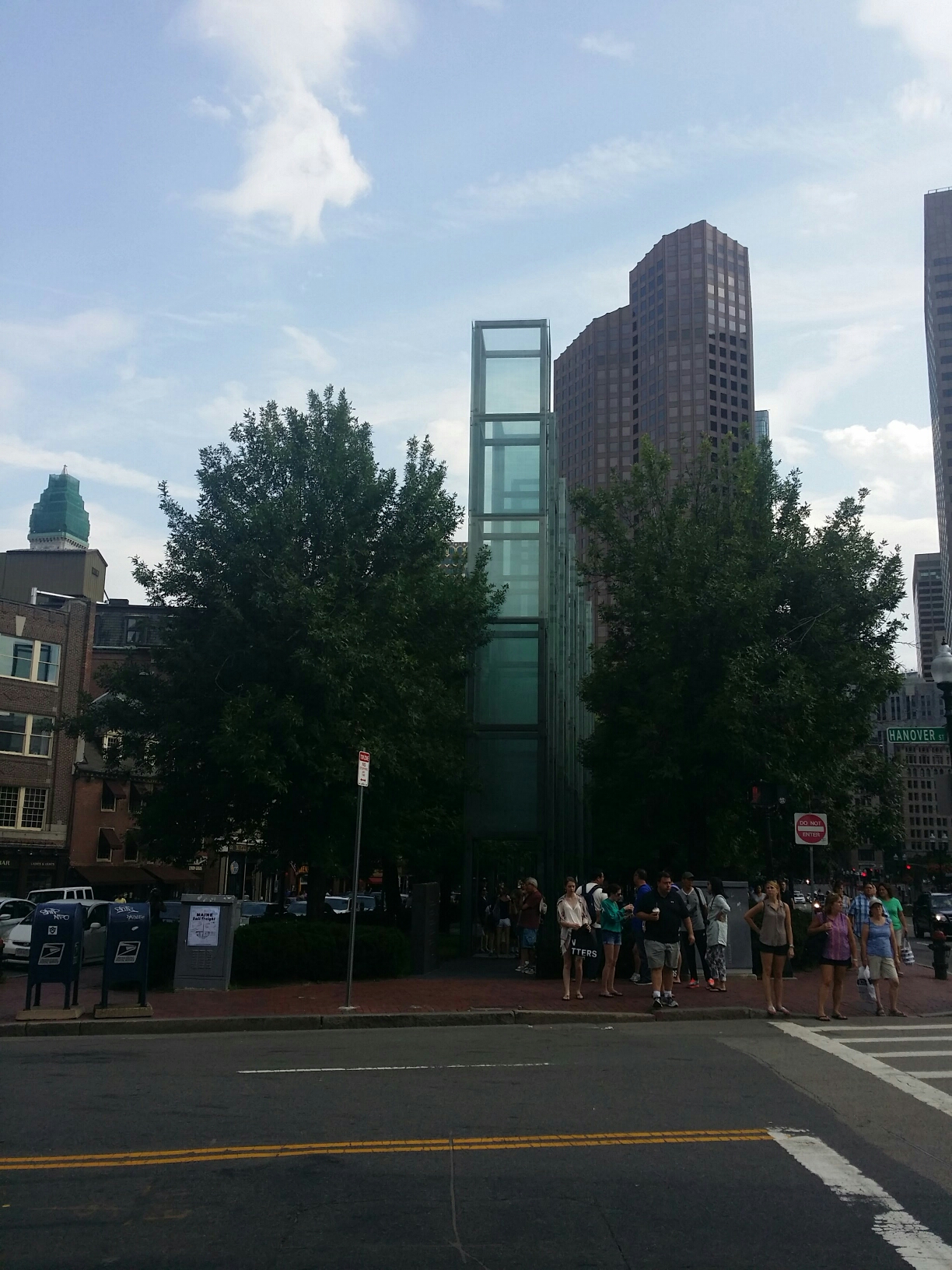
“We must look at these towers of memory and say to ourselves, No one should ever deprive a human being of his or her right to dignity. No one should ever deprive anyone of his or her right to be a sovereign human being. No one should ever speak again about racial superiority…We cannot give evil another chance.” – Elie Wiesel
We walk through St. Anthony festival in little Italy, overwhelming with the warm welcome attitude and gesture of Italians. I can truly feel the tight bond in Italian community through their food and culture.

Funny enough, we choose to eat Korean cuisine in the middle of little Italy, once again we proud to be Asian.

Kimchi fried rice and Grilled Octopus along with tofu salad closed our today’s adventure. Until next time…
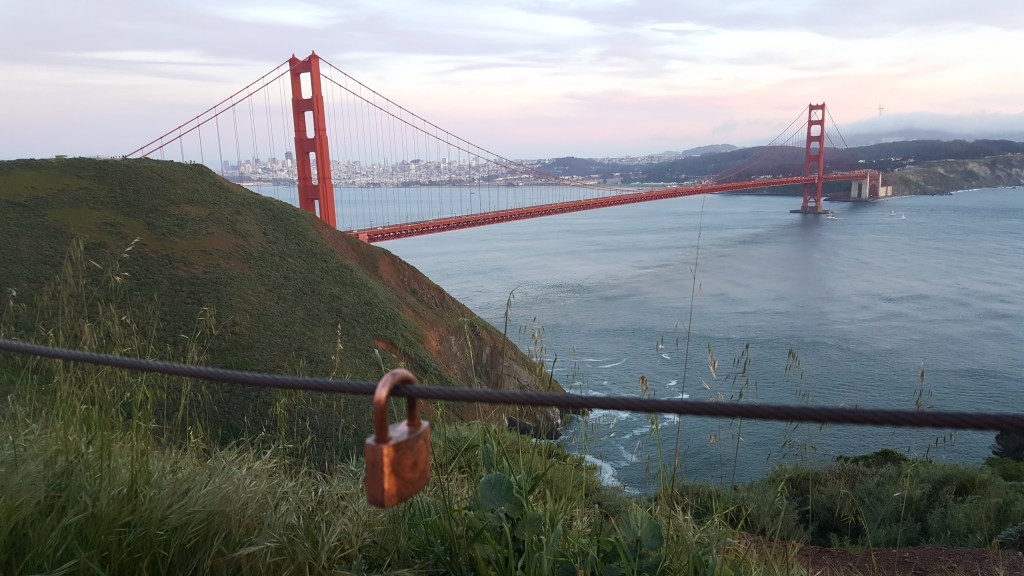


 May Your Search Though Nature ... Lead You To Yourself
Leave a comment